TW: violence, sexual assault, suicide
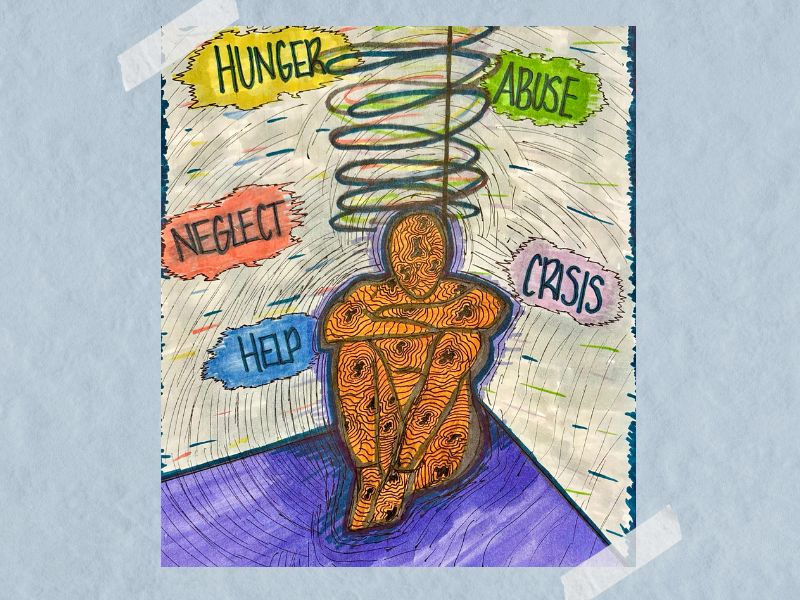
Shane Cratty, an incarcerated man in his 30s, was failed by countless staff members at FCI Butner and USP Canaan. He endured medical neglect, sexual harassment, physical abuse, and illegal confiscation of legal documents. Shane Cratty lived in fear for his life and struggled with suicidal ideations as a result of neglectful and abusive behavior by prison staff. This treatment is unacceptable and should not be normalized in our “justice” system. Read on to step into Shane’s shoes, get a window into our “justice” system, and learn how The Remedy Project freed Shane Cratty from these deleterious conditions.
Our story of Shane Cratty begins when he arrived at FCI Butner in February 2025. On day one, he was taken off his previously prescribed pain medication. At his medical evaluation on arrival, FCI Butner’s notorious doctor Patrick Kraft (his nickname amongst residents and staff is “Dr. Death”) looked Shane in the eye and told him, “You’re only 30, you don’t need any of this shit.” Dr. Kraft finished his “medical advice” by telling Shane that if he needed the medication that badly, another incarcerated person would likely “just sell” it to him on the yard. Kraft, a medical doctor, suggested Shane purchase illegal drugs for his medical needs. This immediately displayed a strong bias against Shane and colored the rest of his experience in FCI Butner. He was in pain for the rest of his time in prison.

In late March of 2025, Shane experienced a terrifying medical emergency, and instead of receiving treatment, he was reprimanded by staff for alerting them to the situation. In his cell, Shane began vomiting blood. In fear and unsure of what to do, Shane pressed the distress button to alert staff to the emergency. Hours passed before staff finally came to see what was happening, and then they refused to give Shane medical assistance. Instead, they wrote him up for “misusing a medical device,” and Shane was forced to wait for the vomiting to subside on its own. He was never checked by medical staff for this emergency, although eventually the vomiting did end.
On June 2nd, Shane, still without his medications, started experiencing delusions and hallucinations. He rightfully reached out for help from psychology intern Dr. Adams, who told him to “accept his delusions.” This advice is deeply harmful for a person experiencing a mental health crisis.
The very next day, while in a state of delusion, Shane walked headfirst into a metal gate, terrified, and did not receive any support from prison staff. Instead, 3 officers dogpiled on Shane and violently dragged him into solitary confinement. The officers put Shane in a 3-point hold, which is not allowed, where his hands were handcuffed together above his head on a bed in a solitary confinement cell. To further humiliate Shane, they stripped him of his clothes. Then, he was written up for “assault without serious injury” and attempting bodily harm. Officers abused their power and worsened Shane's condition. This is a completely unacceptable response to a situation that should have initially been addressed by a mental health professional.
Shane was now desperate for mental health care as his emotional state deteriorated in solitary confinement. Out of options, Shane covered the window on the door of his cell in solitary confinement with paper to get staff attention so they would treat his condition. When Officer Lieutenant B. Hackett saw the paper, he was enraged at Shane’s self-advocacy. Lt. Hackett threatened to enter the cell if Shane did not uncover the window. Shane uncovered it and explained that he needed to speak with a psychologist. Lt. Hackett entered the cell and ordered Shane to cuff up, to which he complied.
Once restrained, Lt. Hackett forcefully grabbed Shane’s elbow and verbally berated him, stating, “who the fuck do you think you are making demands of me.” Lt. Hackett ran him into the back corner of the cell, yelling that “this is my SHU” and that he could do whatever he wanted. Officers Yow and Clark stood outside the cell and deliberately ignored the abuse taking place. Lt. Hackett ordered Mr. Cratty to strip completely naked, then Hackett proceeded to place Shane’s hands on the windowsill. Shane was forced to stand fully nude while Hackett stared at him, verbally humiliating him by saying he was “not a man” and “a little bitch.” Lt. Hackett then grabbed Shane’s left buttock. When Shane stated his intent to file a Prison Rape Elimination Act (PREA) complaint, Hackett told him, “good luck getting anyone to take it, this is my house.”
Shane was humiliated and traumatized following the sexual assault. Hackett’s role as a lieutenant should be to protect incarcerated people, not take advantage of his power to sexually humiliate prisoners. To top off the abuse, Shane was written up for “misusing a security device” (covering the cell window). The discipline ticket claimed Shane repeatedly refused to uncover the window and that additional force was required, when in reality, he covered the window to advocate for himself and was sexually assaulted by prison staff in retaliation.
Shane reported the sexual assault to 17 different staff members, but an investigation never took place. Finally, he was able to file the PREA complaint. When Lieutenant Hackett got word of the complaint, he found Shane and told him ““I’m gonna get you for filing that PREA, bitch.” Shane’s fear consumed him, and he reported that he was experiencing suicidal ideation so that he could be moved to a protected cell farther from Hackett. This level of fear, humiliation, and abuse, is completely misaligned with the BOP’s mission to “foster a humane and secure environment.” Nothing about Shane’s treatment was humane.
Throughout his time under suicide watch (June 12th - July 10th), Shane was subjected to multiple instances of excessive force and assault by officers and psychological abuse by psychology staff. Shane was denied food on several occasions, denied a bible from psychology, denied any clothing except a pair of boxers, denied a proper shower for 21 days, and denied toilet paper multiple times. The room was kept bitterly cold. These conditions are not conducive to healing a mental health crisis or recovering from the sexual trauma Shane faced.
During his time in suicide watch, Shane witnessed another incarcerated individual die as a result of staff and medical negligence. Darnell Fulton repeatedly informed staff that he was experiencing chest pain for several hours after being placed in the adjacent suicide watch cell at approximately 3:00 p.m. on June 15. At approximately 2:45 a.m. on June 16, Mr. Fulton reported difficulty breathing and ongoing chest pain. Lieutenant Harrison did not respond for approximately 15 minutes. While speaking with Lt. Harrison, Mr. Fulton lost consciousness. Harrison left the area without calling medical staff, an act of gross negligence. When he later returned with another officer, Lt. Harrison and Officer Noble moved Mr. Fulton’s arms and legs and poured two cups of water on his face. Mr. Fulton remained unresponsive and the officers left again without medical treatment. When Noble returned, Shane informed him that Mr. Fulton appeared to be dead. Officer Noble laughed and stated, “Well, if he’s dead, it’s too late to do anything about it now.” After Shane insisted the situation was not a joke, Noble checked Mr. Fulton’s pulse and found none. Officer Noble then began improper chest compressions and called Lt. Harrison, who returned and took over. By Shane’s observation, Mr. Fulton had already been without a pulse for approximately 15 minutes by that time. Medical staff did not arrive until approximately 3:30 a.m., and Mr. Fulton was pronounced dead at 3:50 a.m. Witnessing this incident caused Mr. Cratty significant anxiety and reinforced his concern that serious medical emergencies within the unit were not being treated with appropriate urgency, including the possibility that his own medical needs might similarly be disregarded.
Shane began a hunger strike on June 15th because staff were denying him a soft foods diet. Shane had lost 15 teeth during his incarceration, and he found it very difficult to chew hard foods. The demands of the strike were ignored for six days, and Shane lost a significant amount of weight.
On June 29th, psychologist Dr. Halbsgut stared at Shane when he was using the toilet naked. This made Shane very uncomfortable, especially in light of the recent assault he experienced at the hands of Lt. Hackett. When he attempted to report the incident, staff refused to give him dinner. Shane later inquired about his dinner when Lt Harrison and Lt Smith arrived. The Lieutenants proceeded to open the door, step on Shane’s foot, violently slam him into the glass window, and handcuff him with excessive force. Hours later, Officer Hargrove was doing his rounds when Shane asked again about his dinner. Hargrove then slammed Shane’s elbow in the cell’s door slot 4 times before he could pull back, resulting in extreme bruising. Shane was violently assaulted by multiple staff members at Butner for pointing out the pattern of retaliation he experienced. Shane then experienced chest pains and lost consciousness. Instead of properly assessing the injury, medical staff waited half an hour before getting him an inconclusive EKG, refusing to check out his injured elbow, and sending him back to his cell.
Shane began a second hunger strike on June 27th to raise attention to his being denied food, soap, clothing, toilet paper, and having disastrous conditions of confinement. On June 29th, a psychology intern named Dr. Eldridge interviewed Shane and, providing no clear logical explanation, officially “unauthorized” his blanket. Shane did not want to lose the only piece of comfort his cell had, so he put the blanket under his mattress when officers came looking for it. Lt. Criss arrived and he entered his cell accompanied by Officer Blake and Officer Bilohlavek, who slammed Shane’s head and knees against multiple walls five times. Trying to regain his footing, Shane reached for Officer Blake’s wrist. After this incident, Shane was transferred back to solitary confinement as punishment for “assault of an officer” because he grabbed the rubber band on Blake’s wrist while he was being attacked by 3 officers. Shane experienced paranoia and anxiety being back in solitary, afraid that Officer Hackett might return and assault him again.
On July 9, Shane’s mental health worsened significantly, and he did the right thing by reporting this change. Shane reported to Dr. Halbsgut that he was experiencing auditory hallucinations, which instructed him to kill her and other staff members, including the warden, lieutenants, the captain, and the food service administrator. Instead of helping Shane through this crisis, which he reported out of concern for his own safety and that of prison staff, Dr. Halbsgut documented the incident as a disciplinary matter, issuing a write-up for making threats and omitting the context that Shane reported hearing voices. Shane made the report in order to ensure the safety of prison staff, a concern that was never reciprocated to him.
On July 10th, the Discipline Hearing Officer requested Shane's participation in 4 different hearings: incident reports from May 29th (accused of “misusing a security device” when he pressed the duress button during his vomiting episode), June 3rd (accused of “assault w/o serious injury (attempt)" and “threatening bodily harm” during his mental health episode, when he was dogpiled in the lieutenant’s office, dragged to the SHU, and placed in an unauthorized restraint), June 9th (“misusing a security device” by covering the SHU window then enduring a violent and degrading assault at the hands of Lt. Hackett), and June 29th (“Threatening bodily harm,” which was Dr. Haughwout’s gross mischaracterization of Shane’s reporting that he was hearing voices). Shane was found guilty of every incident. He expressed that he was suicidal and terrified that Hackett would fulfill his promise and retaliate against him, but he was taken off suicide watch anyway.
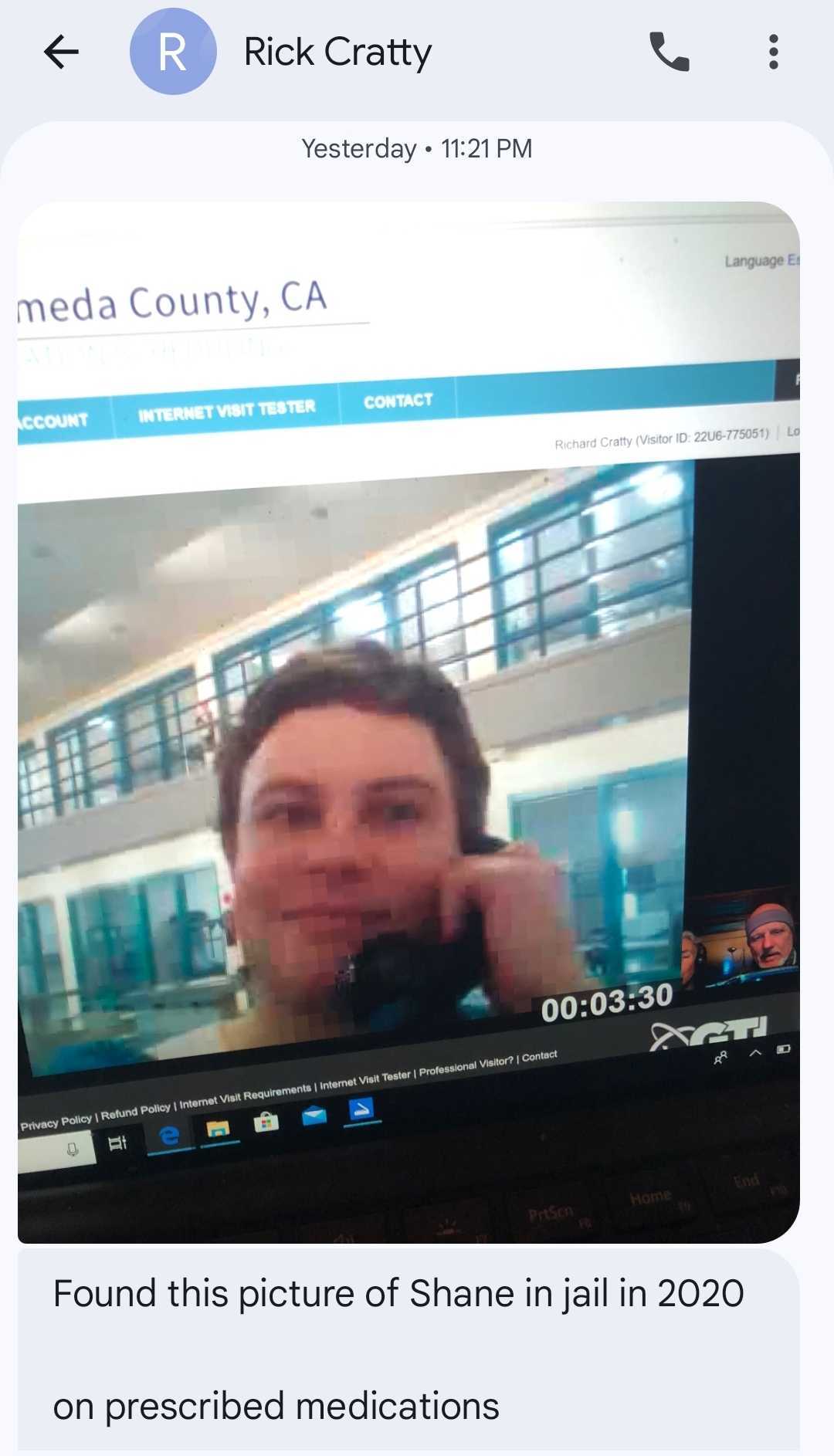
At one point, Shane tried to cut his veins with a sharpened paperclip. He told Officer Gladden, Adcock, and Dr. Swann that he was having suicidal thoughts, but the staff members did nothing. Around September 20th, this mental health crisis came to a head. Shane experienced what he understands to have been a night terror or an acute mental health episode in his cell, during which his cellmate activated the panic button to get staff assistance. The unit officer on duty, Officer Walker, responded and contacted a lieutenant. At this point, Shane had rolled off the top bunk, fallen to the floor, and was left extremely disoriented and confused. The lieutenant who responded was Lt. Hackett, the same staff member who had previously sexually assaulted Shane. After instructing Shane’s cellmate to wait in the television room downstairs, Lt. Hackett entered the cell accompanied by two other officers, at which point Shane was slammed to the ground and punched in the chest while still disoriented and not posing a threat. Once Shane began to regain awareness, he was ordered to climb back onto the top bunk. As he was climbing the ladder, one of the officers pushed him from behind, causing him to slam his head into the wall. Shane then fell back asleep without receiving any medical or mental health evaluation.
After 4 months of enduring abuse, Shane’s administrative remedies had continued to be neglected. Feeling unheard and without another option, he started a hunger strike again on September 25th. He told staff that he was feeling suicidal, and psychology staff Dr. Shemin and Dr. Halbsgut, and the psychiatrist, Dr. Tryhubenko, were present. When Shane asked Dr. Halbsgut to document his hunger strike, she became confrontational and told him she decides what gets documented and what does not. This made Shane feel powerless to his abusers and unable to have his challenges documented. Shane argued back with the psychologists and rightfully told them it is their job to help him. He was subsequently written up, but not presented this insolence charge for another 72 hours.
During one of his hunger strikes, and facing an intense state of mental health crisis, Shane wrote to his family, “If I die and you don’t even sue these people for everything you can, which would be my final wish, I will hate and curse you forever.” This shows the level of pain Shane Cratty was in as a result of staff abuse and negligence.
Shane tried to write a BP-9 to fight the insolence charge written by Dr. Halbsgut, and was denied because he did not attach a copy of the incident report, which is not a requirement. This displays the deep and abusive nature of prison staff who would make Shane’s life miserable through their negligence, and then deny him the right to file administrative remedies to self-advocate. Shane’s 2nd hunger strike lasted a total of eleven days. He told multiple staff members, but eventually knew staff wouldn’t help him anyway, and was forced to break his strike to survive.
On October 7, Shane took his breakfast outside to the Sukkah tents that had been set up for the Jewish holiday of Sukkot, where incarcerated individuals are permitted during the holiday period to eat, study Torah, and pray. Officer Hendricks questioned Shane about what he was doing and told him he was not allowed there. Shane respectfully told him that he was permitted to be there and asked that he not be harassed or persecuted for practicing his religion. Hendricks then attempted to order Shane to go to laundry, preventing him from practicing his religion. He refused and called over the lieutenant and compound officers. Lieutenant Mion responded and escorted Shane to the lieutenant’s office dry cell. While there, an officer named Diaz verbally berated him, accusing him on no grounds of being a “child molester.” After approximately thirty minutes and a shift change, Lt. Reynolds arrived and instructed Shane to return to his unit. On top of all the abuse he experienced, Shane was prevented from practicing his religion.
Shane repeatedly asked his unit case manager, J. Wright, for receipts confirming submission of his administrative remedies, as well as information regarding when those remedies had been received and when responses were due. Wright told Shane that he could not provide any of that information and claimed that he did not have the access necessary to print or retrieve those documents, clearly denying Shane the ability to self advocate. Shane was transferred to USP Canaan but the abuse and neglect continued.
Desperate for help, Shane’s mother reached out to The Remedy Project in December of 2025. As a result of the advocacy from The Remedy Project’s founder, David Simpson, Shane had an emergency hearing about the status of his mental health, and he was released to his family on March 27th, 2026. David Simpson wrote to Shane, advising him on the administrative remedies filed and how to survive the horrific conditions he was experiencing. David encouraged Shane to not give up and to fight the staff abuse he faced through the administrative remedy process. The advocacy of David Simpson, the Remedy Project, and Criminal Justice Realm was able to help free Shane Cratty from torture at the hands of prison staff, allowing him to be released to his family and begin recovering. Shane’s mother told David “The testimonial we will be writing will speak to your brilliance… I am stunned at your command of this matter.”
Shane’s experience in FCI Butner and USP Canaan was horrific and unacceptable. Rather than addressing documented medical emergencies, mental health crises, and formal grievances, staff responses routinely involved neglect, punishment, sexual assault, intimidation, or procedural obstruction. Viewed as a whole, the record reflects not isolated failures, but a sustained course of conduct that subjected Shane Cratty to cruel, degrading, and dehumanizing conditions of confinement.
We request a thorough investigation into all human rights abuses conducted by FCI Butner and USP Canaan staff. Shane is home with his family. However, this kind of abuse can never happen again, and to ensure that it won’t, every staff member involved should be investigated and held accountable for their human rights violations.


